Back Pain Physiotherapy in Karama Dubai | Al Aman Medical Centre
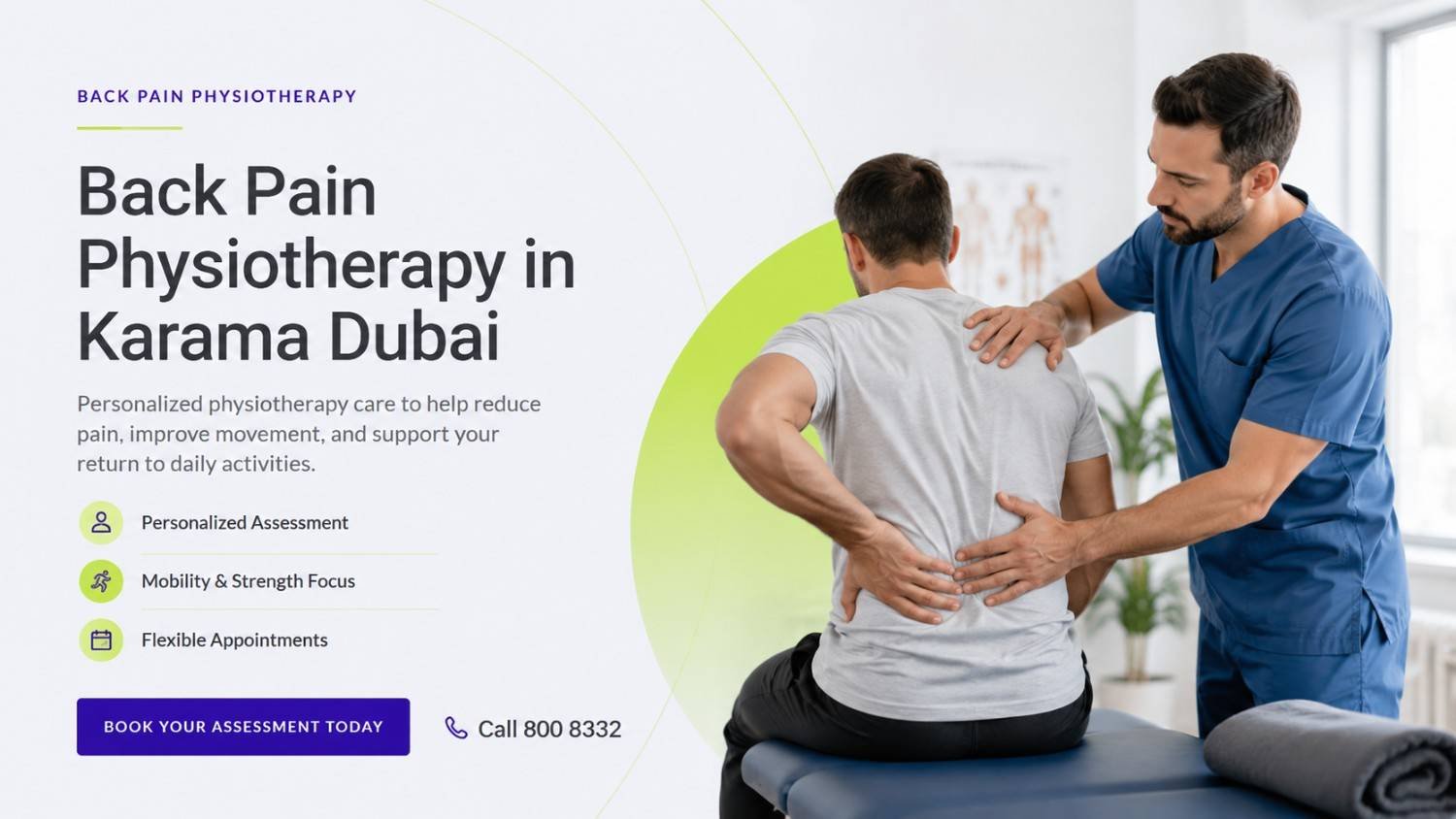
Back pain physiotherapy in Karama Dubai. Back pain can make even ordinary tasks getting out of bed, sitting through a workday, driving, bending, lifting, or sleeping—feel difficult. When discomfort keeps returning or begins affecting your work and daily routine, waiting for it to disappear may not be the right next step. A professional assessment can help identify what may be contributing to the problem and what kind of rehabilitation is suitable for you.
At Al Aman Medical Centre, back pain physiotherapy in Karama Dubai begins with an individual assessment rather than a standard treatment package. Your physiotherapist reviews your symptoms, movement, strength, mobility, posture, work demands, exercise habits, and relevant medical history before recommending a personalised plan.
Our Al Karama clinic is located in Kanoo Group Building, next to ADCB Metro, making it convenient for residents and professionals in Karama, Bur Dubai, Oud Metha, Mankhool, Al Raffa, and nearby areas. To arrange an assessment, call or WhatsApp 800 8332.
Why Choose Back Pain Physiotherapy in Karama Dubai?
Back Pain Physiotherapy in Karama Dubai

People searching for back pain physiotherapy in Karama Dubai are usually not looking for general information alone. They want to know why their back hurts, whether physiotherapy may help, what treatment could involve, and how quickly they can book a qualified professional nearby.
Back pain does not always have one obvious cause. It may be associated with a muscle or ligament strain, reduced spinal or hip mobility, prolonged sitting, sudden changes in activity, lifting, deconditioning, nerve irritation, or an existing medical condition. In many cases, several factors are involved at the same time.
The World Health Organization notes that care for non-specific low back pain can include physical therapies intended to improve strength, movement, and a person’s ability to resume physical activity.
Therefore, treatment should not be based only on where you feel pain. A physiotherapist also needs to understand when the symptoms started, what makes them better or worse, whether the pain travels into the leg, and how the problem affects your daily function.
When Should You Book Back Pain Physiotherapy in Karama Dubai?
Back Pain Physiotherapy in Karama Dubai
You may consider booking back pain physiotherapy in Karama Dubai when your symptoms:
- Keep returning after temporary relief
- Affect sitting, standing, walking, bending, lifting, or sleeping
- Become noticeable after desk work, driving, gym training, or household activity
- Are accompanied by stiffness or reduced confidence in movement
- Extend into the buttock or one leg
- Make you avoid exercise or normal daily activity
- Continue despite basic self-care
When Back Pain Requires Urgent Medical Attention
Back Pain Physiotherapy in Karama Dubai
Physiotherapy is not a substitute for emergency medical care.
Seek immediate medical attention if back pain is accompanied by:
- New changes in bladder or bowel control
- Numbness around the genital, buttock, or saddle area
- Weakness, tingling, or numbness affecting both legs
- Chest pain
- Symptoms following a serious accident or fall
Rapidly worsening pain, fever, unexplained weight loss, a history of cancer, or feeling generally unwell should also be discussed promptly with a doctor.
What Happens During Your First Physiotherapy Assessment?
Back Pain Physiotherapy in Karama Dubai
Your first appointment for back pain physiotherapy in Karama Dubai is designed to answer an important question: what is limiting your movement and function right now?
The physiotherapist may begin by asking about:
- The location, duration, and behaviour of your pain
- Movements or positions that trigger symptoms
- Previous episodes, injuries, surgery, or treatment
- Your work setup, commuting, lifting, and daily activity
- Gym, sports, and exercise habits
- Sleep, stress, and recovery patterns
- Numbness, tingling, weakness, or leg symptoms
- Medical reports, scans, medications, and relevant health conditions
A physical assessment may then include observation of movement, spinal and hip mobility, muscle strength, movement control, balance, functional tasks, posture, and neurological screening when clinically indicated.
Not every patient needs the same tests. Additionally, not every person with back pain requires an X-ray or MRI. Imaging may be considered when clinical findings suggest that it could change the treatment plan or when referral to another medical professional is required.
After the assessment, your physiotherapist should explain the findings, discuss suitable options, and agree on goals such as sitting comfortably, returning to work, lifting safely, walking for longer, or resuming exercise.
Back Pain Physiotherapy in Karama Dubai
What Can Cause Back Pain?
A major advantage of back pain physiotherapy in Karama Dubai is that treatment can be adjusted to the person rather than being based only on a diagnostic label.
Common back pain presentations include the following.
Muscle or Ligament Strain
A sudden lift, awkward movement, increase in training, or unfamiliar physical task may overload the muscles and supporting tissues of the lower back.
This type of back pain may develop suddenly or become noticeable several hours after the activity. Movement may initially feel guarded or uncomfortable. However, the appropriate level of activity and rehabilitation will depend on the severity of the symptoms and the assessment findings.
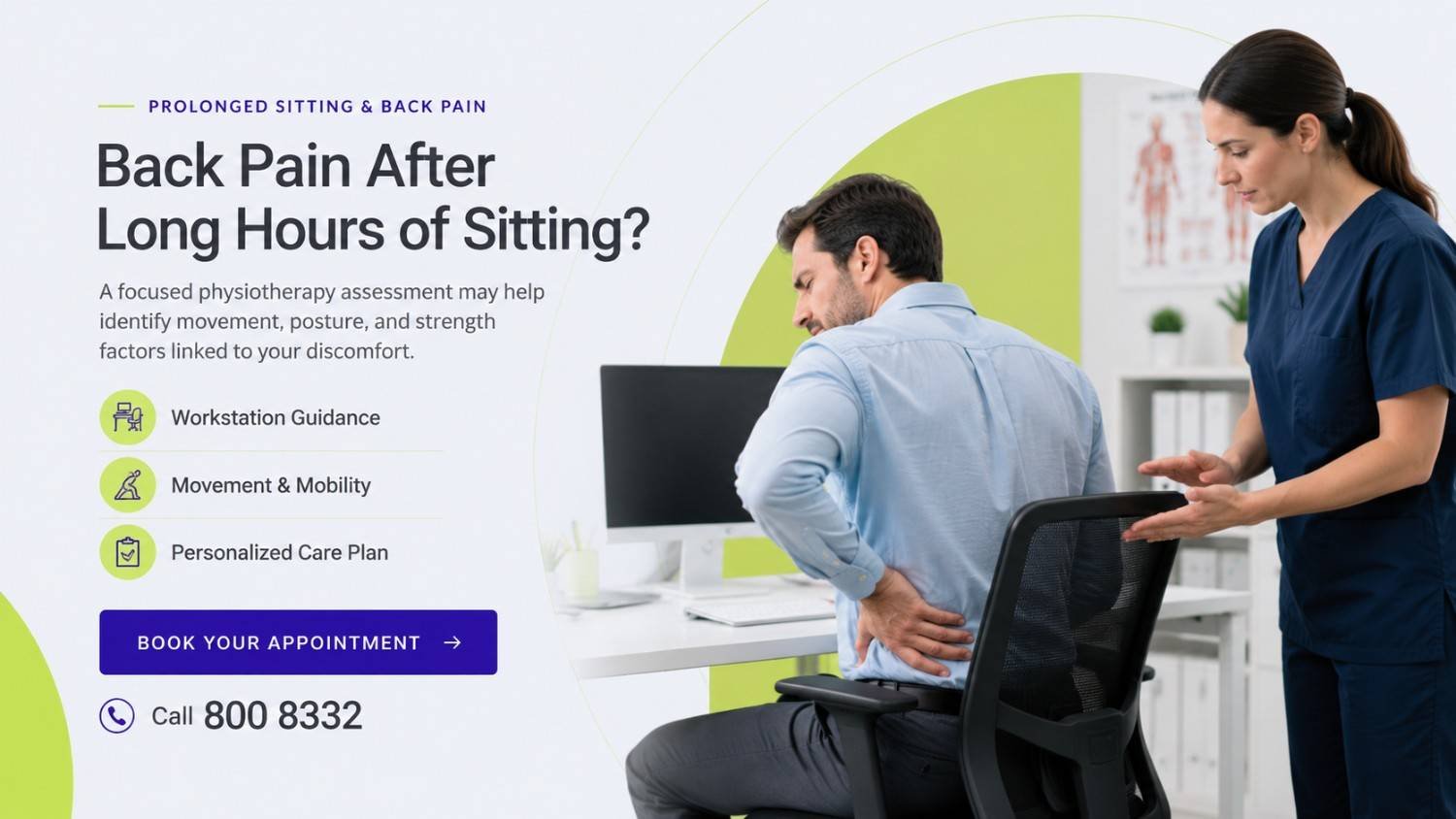
Back Pain Related to Prolonged Sitting
Long hours at a desk, in meetings, or commuting may increase discomfort, particularly when movement breaks are limited.
The problem is not always caused by one “bad posture.” Staying in the same position for too long, reduced physical capacity, unsuitable workstation habits, low activity levels, and sensitivity to repeated loading may all contribute.
Your physiotherapist may therefore assess more than your chair or sitting position. Hip mobility, trunk endurance, movement habits, work schedule, and sitting tolerance may also be reviewed.
Reduced Strength or Movement Control
Some people develop back pain when the trunk, hip, and lower-limb muscles are not prepared for the physical demands being placed on them.
In this situation, rehabilitation may focus on:
- Graded strengthening
- Movement control
- Muscular endurance
- Lifting capacity
- Exercise progression
- Gradual return to meaningful activities
The objective is not simply to make an individual muscle stronger. Instead, the programme should help your body manage the movements and activities that matter in your daily life.
Sciatica or Nerve-Related Symptoms
Pain that travels from the lower back into the buttock, thigh, calf, or foot may involve irritation of a spinal nerve.
Tingling, numbness, burning sensations, or weakness may also be experienced. These symptoms require careful assessment because the treatment plan may differ from a plan used for local muscular back pain.
Read our guide to sciatica treatment in Dubai to understand the symptoms, assessment process, and available physiotherapy options.
Age-Related Spinal Changes
Age-related spinal changes may be present without fully explaining the symptoms. Depending on the assessment, physiotherapy may focus on improving mobility, strength, activity tolerance, balance, and day-to-day function.
Treatment decisions should be based on the person’s symptoms and functional limitations, not solely on the wording of an imaging report.
Postural and Movement Factors
Work habits, repeated movements, reduced hip mobility, muscle imbalance, and low activity levels can influence how the back responds to daily load.
However, posture should not be presented as the sole cause of every back-pain condition. Where relevant, movement habits and ergonomic factors may be addressed as part of a broader rehabilitation plan.
Our posture correction and ergonomics service may be incorporated when assessment findings indicate that posture, movement control, or muscle imbalance is contributing to the problem.
Back Pain Physiotherapy in Karama Dubai
How Back Pain Physiotherapy in Karama Dubai May Help
A plan for back pain physiotherapy in Karama Dubai should be built around your symptoms, clinical findings, goals, medical history, and response to treatment.
Several approaches may be combined rather than relying on one technique.
1. Education and Activity Guidance
Understanding your condition can reduce unnecessary fear and help you make better decisions about movement.
Your physiotherapist may explain:
- Which activities can be continued
- Which movements should be temporarily modified
- How to pace work and household tasks
- How often to change position
- How to manage a temporary flare-up
- How to return gradually to normal activity
For many common back-pain presentations, remaining active within a manageable level is generally preferred to prolonged bed rest. NICE guidance recommends giving people self-management information and encouraging normal activity where appropriate.
Nevertheless, activity advice must be personalised. A movement that is suitable for one person may not be appropriate for another person with different symptoms or neurological findings.
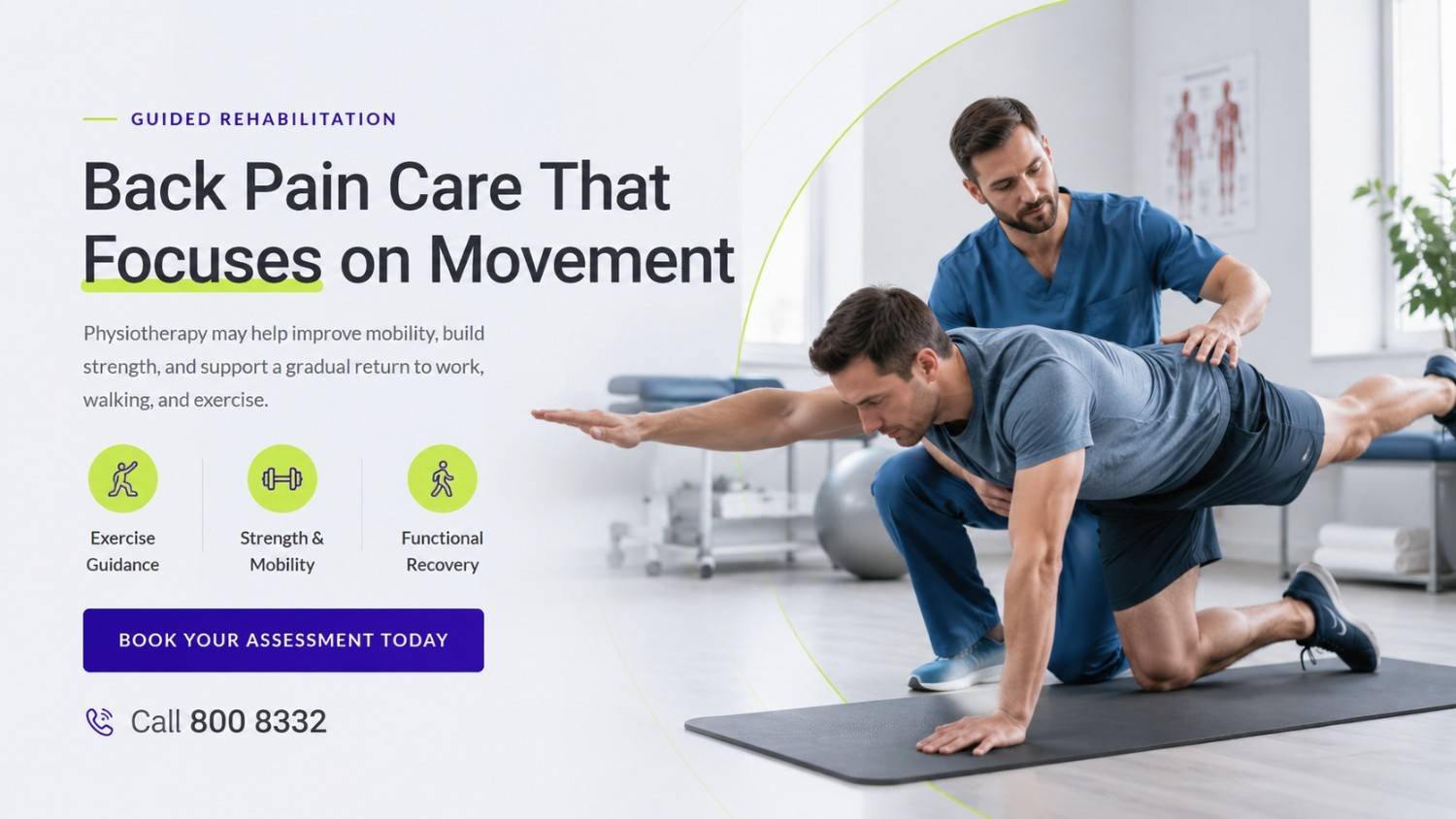
2. Personalised Therapeutic Exercise
Exercise is selected according to your assessment.
Depending on your needs, the programme may include:
- Spinal or hip mobility exercises
- Trunk-strengthening exercises
- Hip and leg strengthening
- Muscular-endurance training
- Movement-control exercises
- Balance and functional training
- Gradual exposure to previously avoided movements
- Work-specific or sport-specific exercises
Exercises should be progressed according to your response. A generic routine found on social media may not account for leg symptoms, recent injury, medical history, movement sensitivity, or your current strength level.
This is why supervised back pain physiotherapy in Karama Dubai can be useful when pain keeps returning or when you are uncertain about how to exercise appropriately.
3. Manual Therapy When Clinically Appropriate
Hands-on techniques may be used to address pain, stiffness, or temporary movement restrictions.
These may include:
- Joint mobilisation
- Soft-tissue techniques
- Assisted movement
- Gentle manual techniques
- Movement combined with therapist guidance
However, manual therapy should not be presented as a stand-alone cure for back pain.
NICE recommends that manual therapy may be considered as part of a treatment package that includes exercise, with or without psychological support where appropriate.
Therefore, temporary symptom relief should be supported by active rehabilitation, education, and a suitable home programme whenever clinically indicated.
4. Strength and Physical-Capacity Building
Temporary relief may not be sufficient if your body is not prepared for the demands of work, lifting, gym training, childcare, prolonged standing, or regular commuting.
Your physiotherapy programme may gradually build:
- Trunk endurance
- Hip and leg strength
- Lifting capacity
- Walking or standing tolerance
- Confidence during movement
- Work-related physical capacity
- Sport or gym readiness
The exercises should be related to what you need to do outside the clinic.
5. Ergonomic and Lifestyle Guidance
Your physiotherapist may review your:
- Desk and computer setup
- Driving position
- Lifting habits
- Sleep positions
- Daily movement levels
- Exercise routine
- Recovery habits
- Work or household demands
The goal is not to force you to maintain one rigid “perfect” posture throughout the day. Instead, practical adjustments may be introduced to reduce repeated aggravation and make regular movement easier.
For example, changing position regularly may be more realistic than trying to sit completely upright for several hours without moving.
6. A Personalised Home Exercise Programme
A manageable home programme may be provided and adjusted as your symptoms and physical abilities change.
The exercises should be explained clearly, including:
- How to perform them
- How often they should be completed
- Which sensations are acceptable
- When an exercise should be stopped
- How the exercise will be progressed
To understand the wider rehabilitation process, read our guide explaining how physiotherapy works.
What Treatments May Be Included?
Back Pain Physiotherapy in Karama Dubai
Depending on your assessment and clinical suitability, back pain physiotherapy in Karama Dubai may include:
- Movement and functional assessment
- Spinal, hip, and lower-limb mobility exercises
- Progressive trunk, hip, and leg strengthening
- Motor-control and movement-retraining exercises
- Manual therapy as part of an exercise-based plan
- Soft-tissue techniques
- Posture and ergonomic guidance
- Graded return to work, gym, sport, or daily activity
- Education about pacing and flare-up management
- A personalised home exercise programme
- Referral to a GP, orthopaedic specialist, or another healthcare professional when indicated
Specific techniques should only be selected after assessment. Treatment duration and outcomes vary between patients, and no particular technique can guarantee the same result for everyone.
How Many Physiotherapy Sessions Will You Need?
Back Pain Physiotherapy in Karama Dubai
There is no fixed number of sessions for back pain physiotherapy in Karama Dubai.
A recent mild strain may require a different plan from recurrent back pain, sciatica, post-surgical rehabilitation, or symptoms that have been present for several months.
The expected treatment period may be influenced by:
- How long the symptoms have been present
- The level of pain and functional limitation
- Whether leg symptoms or neurological findings are present
- Your general health and previous injuries
- Your work and physical demands
- Consistency with the home programme
- How your symptoms respond to progressive rehabilitation
The plan should be reviewed regularly, with exercises and activities progressed as your ability improves.
Instead of focusing only on the pain score, progress may also be measured through your ability to sit, walk, sleep, work, bend, lift, exercise, or perform other meaningful activities.
Clinic-Based or Home Physiotherapy?
Clinic sessions may suit patients who need supervised rehabilitation, treatment equipment, or regular exercise progression.
However, travelling may be difficult when pain is severe, mobility is limited, or you are recovering after surgery. In these situations, physiotherapy at home in Dubai may be considered following discussion with the clinic.
The most appropriate setting will depend on:
- Your mobility
- The nature of your condition
- Your rehabilitation goals
- Equipment requirements
- Safety considerations
- Your physiotherapist’s recommendations
Why Patients Choose PhysioVeda in Al Karama
Back Pain Physiotherapy in Karama Dubai
When booking back pain physiotherapy in Karama Dubai, convenience matters, but clinical decision-making matters even more.
Al Aman Medical Centre approach is centred on assessment-based, patient-specific rehabilitation.
Patients choose our Karama clinic for:
- Care delivered by DHA-licensed physiotherapists
- Personalised treatment planning
- Clinic access next to ADCB Metro
- Appointment availability throughout the week
- Assessment of back pain, sciatica, mobility problems, and musculoskeletal conditions
- Post-surgical rehabilitation options
- Clinic-based and home physiotherapy services
- Clear guidance intended to improve function and self-management
You can explore our dedicated back pain treatment service or view the full range of physiotherapy services in Dubai.
PhysioVeda’s current clinic information lists the Al Karama branch at Kanoo Group Building, next to ADCB Metro, with daily opening hours from 9:00 AM to 9:00 PM.
Back Pain Physiotherapy in Karama Dubai
Book Back Pain Physiotherapy in Karama Dubai
You do not have to keep adjusting your entire day around back pain.
If sitting, standing, walking, sleeping, driving, lifting, or exercising has become difficult, an individual assessment can help you understand the next appropriate step.
Book back pain physiotherapy in Karama Dubai at PhysioVeda Medical Center and receive a rehabilitation plan based on your symptoms, movement, goals, and clinical findings.
Call or WhatsApp: 800 8332
Location: Kanoo Group Building, 201, next to ADCB Metro, Al Karama, Dubai
Book an appointment with Al Aman Medical Centre
Follow Al Aman Medical Centre on Instagram for physiotherapy education, clinic updates, and movement guidance.
Treatment recommendations, recovery times, and outcomes vary between individuals. This article provides general educational information and does not replace an assessment by a qualified healthcare professional.